Posts

Economics in One Lesson Part 1
Image
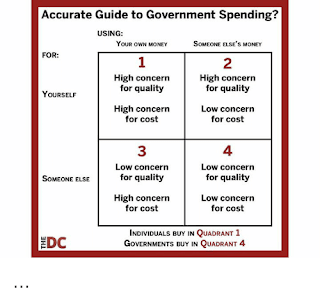
 I actually read another book since finishing the Bitcoin Standard. I didn't feel like writing about it here, since it was a different kind of non-fiction. It is by my friend Ben Schilaty and it's called A Walk in My Shoes, about his experiences as a gay Latter-Day Saint. Some of it I'd already read from his blog, and some of the things I "learned" were spiritual and personal, meaningful to me because my testimony needed his testimony to buoy it up. Not exactly what this blog is for. But if anyone actually ever reads this, I do recommend Ben's book. I offered it up on my local Buy Nothing FB page when I was done and there are several going to pass the book around, so that was fun.  So now I'm onto Economics in One Lesson by Henry Hazlitt. The Mises Institute was shipping them to people for free, so I said, "Why not?"  The "one lesson" is taught right at the beginning, all other chapters offering different ways this lesson is forgotten o...

Bitcoin Standard Ch. 10

 Well, I did it, I finished reading the Bitcoin Standard. Ok, I sort of finished it. Confession: I skimmed over a large portion of the last chapter, since it was largely repetition of earlier points and glowing praise of why Bitcoin is worth the large amount of energy it uses. I did want to write about one thing that I don't think I mentioned before that was reviewed in this final chapter.  Bitcoin uses a lot of redundancy in its blockchain, which is why it consumes so much power and also why it is so impervious to manipulation. This means that one of the weaknesses in Bitcoin is that it is limited in how many transactions it can handle in a given period of time. Visa and Mastercard handle around 2.000 transactions per second, while Bitcoin can handle around 4. (I think those are the numbers given in the book. In any case, Visa and Mastercard handle much more than Bitcoin can). This means that Bitcoin's blockchain can never take over all transactions. This does not mean that B...

Bitcoin Standard Ch. 8 & 9

 Chapter 8 Bitcoin as Digital Cash Paying in cash is handy, because it is instantaneous, requires no third party or regulate or guarantee against double spending (you can swipe your card with no money in the bank, but you can't pay with cash the you don't have), there are no transaction fees, cash can't be hacked, and the government can't track or control cash payments. Digital payments are handy because you don't need to actually carry around all your money, do math, worry about having the right change, etc. Bitcoin has most of the best of both of these worlds, although you do pay small fees-it it typically less than the fees you currently pay with sending fiat money, especially if you are sending large amounts over large distances, like to family in other countries. More on this later.  At this point the author explains proof of work, the process by which Bitcoin transactions are recorded on the blockchain. In simplest terms, (the only ones I'm capable of usin...

Bitcoin Standard Ch. 6 & 7

 Ch. 6  Money plays a vital role at a societal level as a means of communication. Recently, we've seen the prices of lumber change dramatically. What did this tell you? We could have inferred that the supply was low, perhaps a processing facility was shut down for some reason, or that the supply chain was compromised. Perhaps that communicated to you that a project you had been planning should be put off until lumber becomes more easily available, or that you should charge more for the products you are putting out in anticipation of increased costs of business when you next need to purchase lumber. In a centralized economy, the government decides what lumber should cost. Yay, no more skyrocketing prices for lumber, how lovely! Except now you don't know to put off your project so you go out and buy the tools you will need and start excavating or whatever prep you need. Now you don't increase your prices to offset the incoming increase in raw materials that you use. Now peopl...

Bitcoin Standard Ch. 5

 The key concept to understand from this chapter is "time preference". You can understand time preference if you think of the classic experiment with kids and marshmallows. Here's a marshmallow. You can eat it now, but if you wait fifteen minutes, I'll give you another one. Children with high time preferences eat the marshmallow immediately. Children with low time preferences wait for the double reward. In economic terms, when you are confident that your money will retain or increase its value, you have a low time preference, you are willing to be patient as you collect interest or invest in order to have more money in the future. If your money is rapidly losing value, you are better off spending it now, as you will not have enough to buy the same things in the future; you have a high time preference.  Societies with sound money have low time preferences. This allows them to invest in innovation and future growth. This is essential for the growth of civilization not j...

Bitcoin Standard Ch. 4

 Oh, boy, do I have a lot to learn. I've always fancied myself rather good with money, not that my circumstances have ever required me to be exceptionally so, but I feel I've always been good about balancing my spending, etc. But I had no idea how little I really understood money.  WWI marked the beginning of fiat currency, which was originally backed by (or redeemable into standardized amounts of) gold (or no one would want it). Since it is centrally controlled it is prone to having it's supply increased quickly compared to its stock (too easy and tempting to print more money without increasing gold supply to back it), impoverishing holders. This chapter gives examples of fiat currencies doing just that, collapsing, and ruining lives. Within only a few weeks of WWI, governments began printing money, above and beyond what their gold stores allowed. This was an incognito way (as opposed to taxation) of funding the war, which devalued people's stored wealth. If a governme...

Bitcoin Standard ch. 2 and 3

 Ch. 2      This chapter starts with some historical examples of money and how it has worked in different cultures. Most notably, as the author indicated that it was the closest thing to how Bitcoin works, the Rai stones of the Yap people in Micronesia. The Rai stones were large limestone discs with a hole in the middle from when they were transported.  They had to be excavated and carved on a nearby island, making increasing the supply difficult, and their rarity made them beautiful and desirable. Although they came in different sizes to some extent, they were heavy ang bulky- they were not scalable across distance. This problem was solved by a different method of transferring them. The stones were left on display in a public place, and ownership was transferred by public decree. This system worked well for the Yap people for a long time, until an Irish man, David O'Keefe came along. When he couldn't entice the people to work for him (harvesting coconuts or som...